
Small Circuits, Big Impact
Microelectronics research isn’t just about making things smaller—it’s about making them smarter, faster, and more efficient. The DOE’s national labs are pushing the boundaries of what’s possible, driving innovations crucial for the future of computing, energy, and national security.
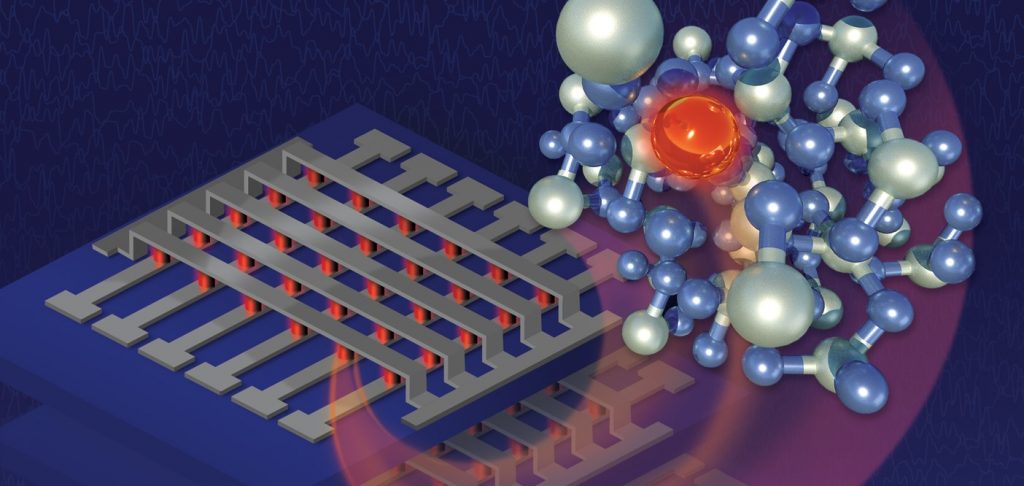
Revolutionizing microelectronics with novel tactics such as Threadwork, a transformative co-design approach to materials and computer architecture research.
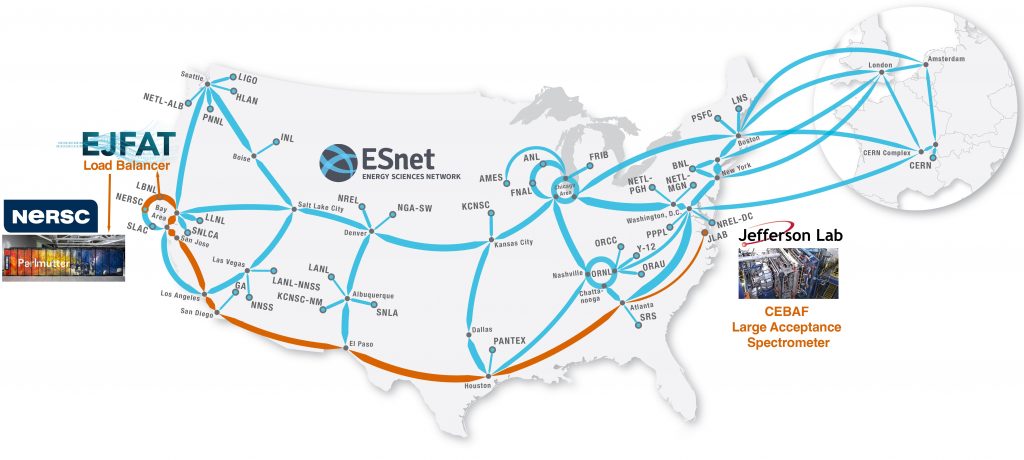
EJFAT streams terabit-rate data from instruments to ASCR computing facilities over continental-scale distances.

Lawrence Berkeley National Laboratory
Advanced ferroelectric materials to create ultra low voltage transistors.

Lawrence Livermore National Laboratory
Memory-centric computing: characterization, optimization, purpose-built IP for High Performance Computing

National Energy Technology Laboratory
Developing novel nanostructured carbon materials to improve the performance and efficiency of memristors, transistors, and other microelectronics.

Designing energy-efficient, analog computing architectures with novel materials for in-sensor spiking neural networks.

Pacific Northwest National Laboratory
PNNL is developing new microelectronics materials and prototypes to meet energy-efficiency challenges, leading three microelectronics science research center (MSRC) projects as well as the End-to-end Co-design for Performance, Energy Efficiency, and Security in AI-enabled Computational Science (ENCODE) project.
MSRCs:

Princeton Plasma Physics Laboratory
PPPL’s expertise in low-temperature plasmas and reactor simulation is advancing processing science for microelectronics.

COINFLIPS is revolutionizing uncertainty-aware scientific computing and AI through codesign between stochastic hardware and probabilistic algorithms.

SLAC National Accelerator Laboratory
An integrated computing approach for data pipelines from the Edge to HPC using AI/ML and data-centric programming.